|
Our next stop was
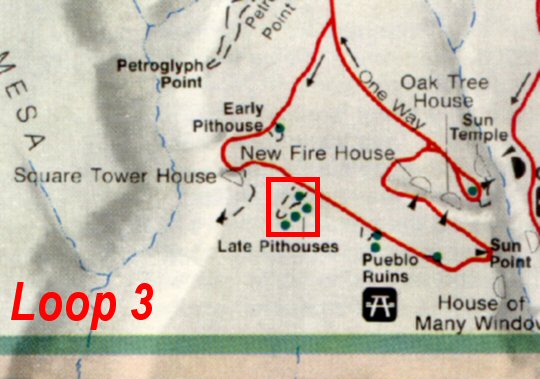
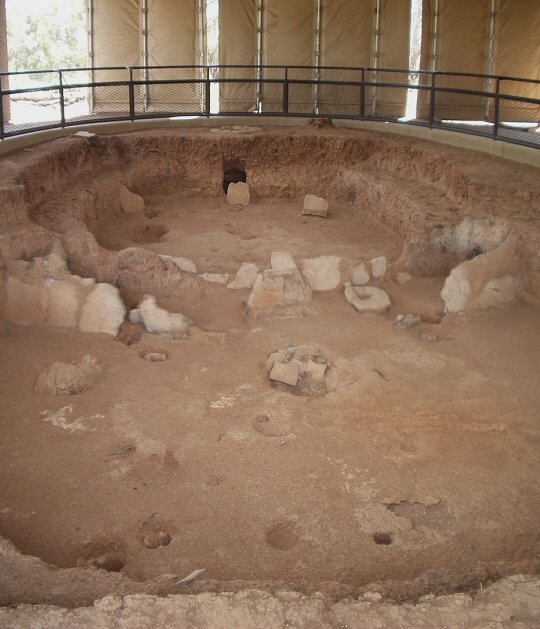
more mesa top pithouses. This area had several pithouses for viewing.
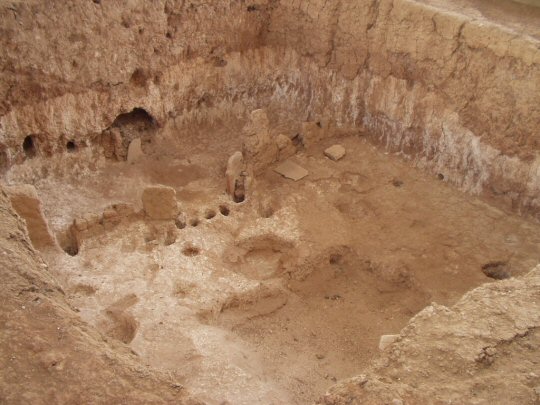
This pithouse at first appears to be a normal pithouse.
But upon closer inspection, it turns out that both rooms have almost identical features. While excavating the larger room, archeologists found evidence that the pithouse had burned down. A second pithouse had then been constructed by enlarging the antechamber and using it as the main living space. The second pithouse did not have an antechamber. As it turns out, rebuilding may have been a common practice. Upon examining numerous pithouses, archeologists found that the majority of them had burned down. When you think about it, this is really not surprising. There was only about six feet between the cooking fire and the ceiling made of wood and mud. The fire would heat up and dry out the wood, eventually making it possible for it to catch on fire. Here is another pithouse.
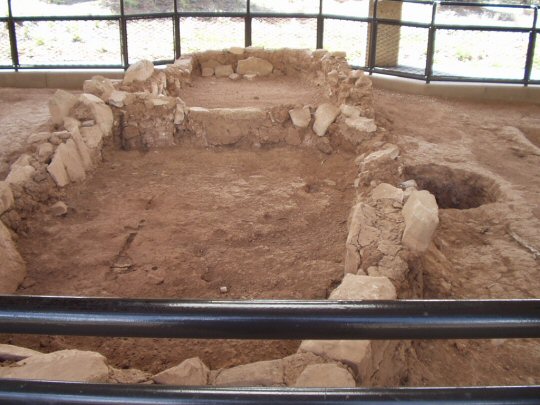
Another of the ruins had a pitroom (not to be confused with pithouse).
A pitroom may be something like a predecessor to the Kiva. Like a pithouse, it was dug in the ground, then had walls and a roof put over it. Unlike a pithouse, it was dug deeper, so the roof was only a short distance above ground. This particular pitroom is unusual in that it has a rectangular shape. Most pitrooms were circular, like a Kiva. Another ruins appears to be a foundation.
The sign at the
parking area says "Pithouses and Pueblos", so this may be the
foundation for a Pueblo village, or part of a village.
|